Northumberland International Dark Sky Park was the first International Dark Sky Park in England, designated by the International Dark-Sky Association in 2013. Covering 575 square miles — including Northumberland National Park and Kielder Water and Forest Park — it is the largest area of protected night sky in Europe.
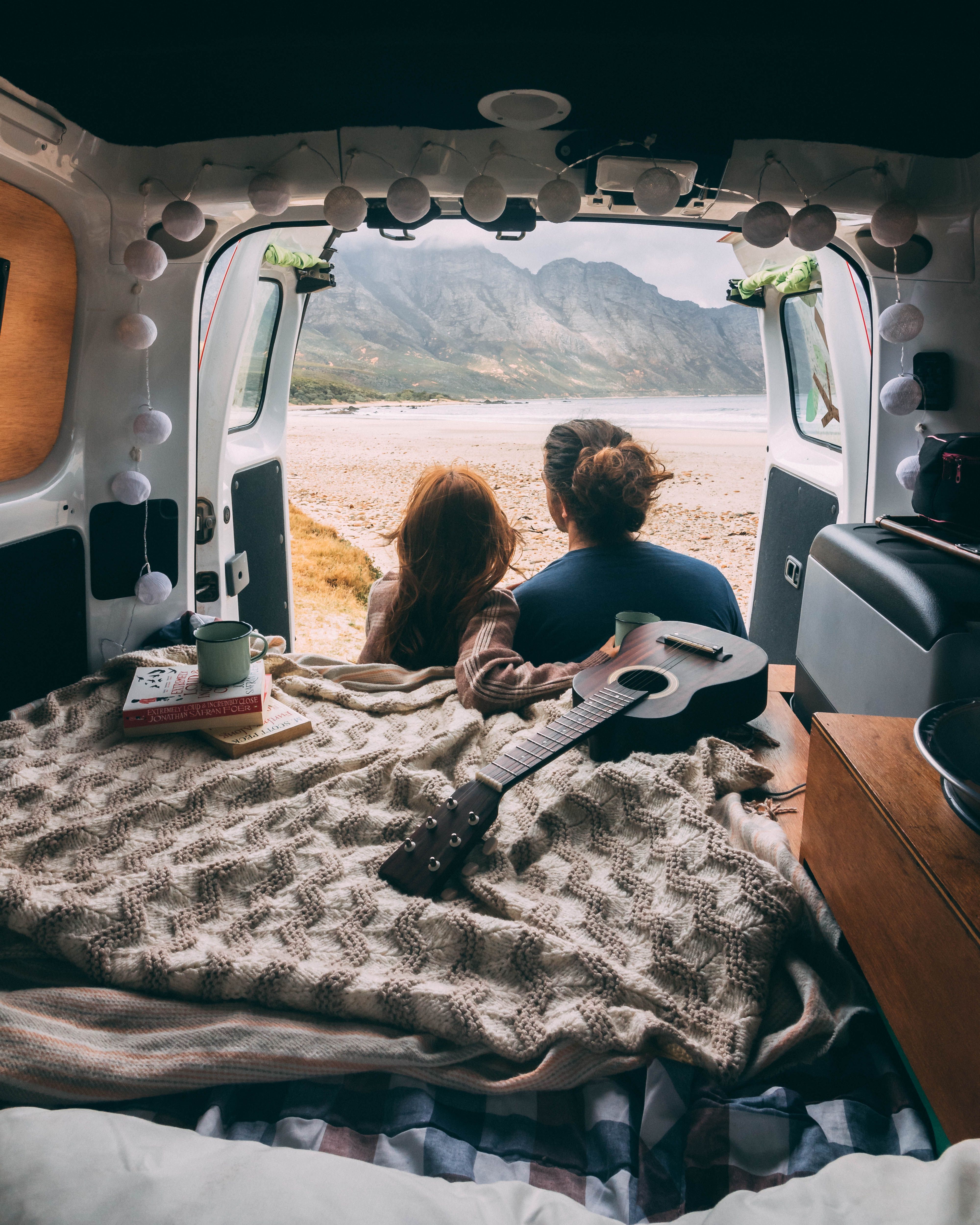
For van lifers, Northumberland is a prime destination. The dark skies are genuinely dark — Bortle Class 2 on the sky quality scale, meaning the Milky Way is visible to the naked eye, and you can see zodiacal light after sunset. The region is less crowded than the Lake District or the Peak District, and there are campsites and parking spots within walking distance of the best viewing locations.
Where to Stargaze
Kielder Observatory
Kielder Observatory is the centrepiece of the Dark Sky Park. It sits at Kielder Water at an altitude of 200m, away from any artificial light. The observatory has two telescopes: a 20-inch (0.5m) Planewave CDK reflecting telescope and a 14-inch Celestron Schmidt-Cassegrain telescope.
The observatory runs public stargazing events several nights per week. Tickets are £12-£20 per person and book out weeks in advance (especially during meteor showers). The observatory car park is open to visitors during events.
The observatory is a 10-minute drive from the Kielder campsites. If the sky is clear, you can walk from Kielder Waterside campsite to the observatory approach road in about 15 minutes.
Kielder Waterside
The south-east shore of Kielder Water, near the Kielder Waterside holiday park. The area has minimal light pollution and a flat, open aspect facing south — good for Milky Way photography over the water.
Best for: Milky Way photography with the lake in the foreground. Parking at the Waterside car park (open 24 hours for overnight parking — check with the site office).
Walltown Quarry
On the Hadrian's Wall section of the park, near Greenhead. A disused quarry with a large flat grass area surrounded by woodland. The location is Bortle Class 3 — slightly more light pollution from Hexham to the east, but still excellent conditions.
Best for: Wide-angle Milky Way shots and meteor shower watching. The Roman Wall silhouettes make good foreground subjects.
Cuddy's Crag
A viewpoint on the northern edge of the park near the Scottish border (about 2 miles south of Carter Bar on the A68). The highest point in the park accessible by vehicle. Parking at the Cuddy's Crag car park (small, approximately 6 spaces). From here, the sky is Bortle Class 2 — the darkest accessible location in the park.
Best for: Aurora borealis (northern lights) when the Kp index is 5+. The open northern horizon and high altitude (350m) make this the best location in northern England for aurora viewing.
Best Campsites for Dark Sky Access
Kielder Waterside Campsite
The closest campsite to Kielder Observatory. Grass pitches with electric hook-up (£25-£35 per night). Showers, toilets, pub, and shop on site. Open March to October. Book ahead — it is the most popular campsite in the park.
Van life specific: Generous pitch sizes (8m × 8m) so a large van fits easily. Chemical disposal point and fresh water. Some pitches have a view of Kielder Water.
Kielder Forest Drive Campsites
Two basic campsites along the Forest Drive (a 12-mile toll road through Kielder Forest): Blacks Moss and Byrness. These are "forest campsites" — no electric hook-up, basic toilet block, no showers. £10-£15 per night.
Best for: Hardcore stargazers who want to be in the darkest part of the forest with zero light pollution. The Forest Drive closes at night (you cannot drive through after dark), so you need to arrive before sunset and stay until morning.
Stonehaugh Camping Barn
A basic bothy/camping barn near the village of Stonehaugh on the western edge of the park. Dormitory-style accommodation (£15-£20 per person) with a small camping field. The barn is run by the forestry commission.
Van life specific: The camping field has no electric hook-up, but the location is excellent — Stonehaugh is in a designated Dark Sky zone with no street lights. The village has a small car park where vans can park overnight by arrangement (ask at the barn).
Wild Camping Options
Wild camping is not legal in England without the landowner's permission. However, Northumberland National Park has a permissive approach — they tolerate responsible wild camping in certain areas, particularly in the Kielder Forest section.
Do's:
- Park at designated forest car parks (not on verges or grass)
- Arrive after sunset, leave before sunrise (minimise visual impact)
- Use a tarp to shield your van's interior light when parked
- Pack out all waste — there are no bins at forest car parks
- Keep noise to a minimum — sound carries across the water
Don'ts:
- Light fires — the forest is a fire risk (even in winter)
- Park in forest road passing places — these are for log lorries
- Leave rubbish — the park is monitored by forestry rangers
The Forestry England car parks near Kielder Castle are the most commonly used for overnight van parking. They are not officially designated for wild camping, but the forestry commission generally does not enforce a strict "no overnight" policy if you are discreet, arrive late, and leave early.
Best Time to Visit
Winter (November-February): Best for stargazing. Sunset at 3:45-4:00pm, giving 14+ hours of darkness. The Milky Way core is not visible (it is below the horizon), but the winter constellations — Orion, Taurus, Gemini — are spectacular. Meteor showers: Geminids (December 13-14) and Quadrantids (January 3-4).
Spring (March-May): Good conditions. Sunset at 6-8pm, giving 8-10 hours of usable darkness. The Milky Way rises in the early morning (2-4am). Less cloud cover than winter. Cool but not cold (3-10°C).
Summer (June-August): The worst season for stargazing. Civil twilight lasts until 11pm at this latitude (55°N). Astronomical darkness is only 3-4 hours (midnight to 3am), and the sky never gets fully dark near the summer solstice. Cloud cover is highest. Fewer constellations visible because of the short dark window.
Autumn (September-October): The best compromise. Good darkness (7-9 hours). Mild temperatures (5-15°C). Milky Way is visible in the early evening. Fewer midges than summer. The Orionid meteor shower peaks in October.
What You Need for Van-Based Stargazing
A red-light head torch — A standard white torch destroys your night vision and disturbs other stargazers. A red-light head torch (Petzl Tikka or similar, £20-£30) preserves your dark adaptation.
Camping chairs and blankets — You will be sitting still for 30-60 minutes. A chair with a high back (Helinox Chair One or similar) and a down blanket or sleeping bag keeps you warm. In winter, add a hot water bottle and chemical hand warmers.
Hot drinks — A Thermos or a Jetboil with hot chocolate/soup is essential for winter stargazing.
Binoculars (optional) — 10×50 binoculars (£50-£100) show more detail in the Milky Way than most small telescopes. They are easier to use, more portable, and give a wider field of view.
Camera (optional) — For astrophotography, a camera with manual controls (any DSLR or mirrorless since 2015), a wide-angle lens (14-24mm f/2.8 or faster), and a tripod. The Kielder sky is dark enough for single-exposure Milky Way shots at ISO 3200, 20 seconds, f/2.8.
Hack your van's interior lights — Tape over or disable your van's interior courtesy lights that come on when you open the door. A van with its interior lights on is visible from a mile away and ruins the view for anyone nearby.
Other Things to Do in Northumberland (Daytime)
Hadrian's Wall — The best-preserved Roman frontier in Britain. The Sycamore Gap section (a 10-minute drive from the Walltown Quarry parking) is the most photographed. Walk the wall from Housesteads Roman Fort to Steel Rigg (approximately 4 miles, moderate difficulty).
Bamburgh Castle — 40 miles east of the Dark Sky Park, on the Northumberland coast. A medieval castle on a volcanic outcrop overlooking the North Sea. The castle is open to visitors (£15 adults). The beach below the castle is excellent for winter walks.
Lindisfarne (Holy Island) — Accessible via a causeway that is passable at low tide. Check the tide times before driving across. The small island has a priory ruins, a castle, and a meadery. The island is a 50-minute drive from Kielder.
Alnwick Castle — Another major Northumberland castle, 45 minutes south-east of Kielder. Used as a filming location for Harry Potter (Hogwarts in the first two films). Open to visitors.
Farne Islands — A boat trip from Seahouses (50 minutes east) to see puffins, seals, and seabird colonies. Boat trips run April-September.
The Bottom Line
Northumberland Dark Sky Park is one of the best destinations for UK van life. The combination of dark skies, uncrowded roads, good campsites, and genuinely helpful local rangers makes it a relaxed destination — especially in autumn and winter when the stargazing is at its best.
Plan for cold weather (even in October, night temperatures drop to 0-5°C), book your observatory tickets in advance, and arrive early enough to park in daylight. The Forest Drive campsites at Blacks Moss and Byrness are the best option for dedicated stargazers. The Kielder Waterside campsite is the best for comfortable van camping with dark sky access.
The aurora is a bonus — you need a Kp index of 5+ and a clear northern horizon. Check the Space Weather Prediction Centre's aurora forecast before you go. If the forecast is high, head to Cuddy's Crag or the Kielder dam wall for the best northern-facing view.