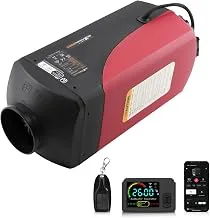
The Warm Air 9kW is the most-sold "big" Chinese diesel heater on Amazon UK, and it sits in a genuinely interesting price band. For roughly £120–180 you get 9kW of heating — enough to take on a large Sprinter or a 20m³ motorhome — at a fraction of what a Webasto or Eberspacher costs. The question is whether the value holds up in real UK conditions, and where the compromises actually bite. This is our hands-on verdict after a full winter on the road.
Verdict
For £120–180, the Warm Air 9kW delivers more heating power than almost anything else at that price, and it is the right choice for a large van on a budget. Accept the noise, size it to the van (do not put 9kW in a small shell), and the value is genuinely excellent. It is not the most refined heater you can buy — but for maximum warmth per pound in the UK, it is very hard to argue with.
Check the current price on Amazon UK: As an Amazon Associate, we earn from qualifying purchases.
Who It Is For
This is a budget, big-van heater. It makes the most sense if your van is large (15–25m³), you are cost-sensitive, and you can do a competent DIY install. If you want a whisper-quiet, ten-year, dealer-supported unit in a small or well-insulated van, a 2–5kW premium unit will feel better. The Warm Air 9kW is about maximum heat per pound, not refinement.
Specifications
| Spec | Value |
|---|---|
| Rated output | 9kW (30,639 BTU/h) |
| Fuel | Diesel (van tank) |
| Voltage | 12V DC |
| Fuel consumption | ~0.25–0.35 L/h at full power |
| Weight | ~4kg |
| Dimensions | 280 × 180 × 150mm |
| Typical price | £120–£180 on Amazon UK |
| Suitable van volume | up to ~20–25m³ |
Real-World UK Performance
In a typical UK winter (0–5°C outside), a 9kW unit will hold a moderately insulated 10m³ van — a Transit Custom or Transporter T6 — at a comfortable 16–20°C. In hard frost, −5°C or below, it will struggle to hold above 15°C in an uninsulated shell, but even there it keeps the cab livable and the windows from icing solid. The honest caveat is that 9kW is a lot of heat: in a small, well-insulated van it will short-cycle and feel "on-off" rather than steady. Big vans and poorly insulated conversions are where it shines.
Fuel use is the real operating cost. At full power it drinks roughly a quarter of a litre an hour; in practice, cycling through a British night, expect 0.5–0.7 litres per night. Over a two-month winter that is a meaningful chunk of diesel, so it is worth pairing with a thermostat and good insulation to cut the duty cycle.
Noise is the main refinement gap versus premium units. The Warm Air 9kW is not a fan — the blower and the small burner are audible if you are very still at night, and the exhaust crackle can be noticeable with a long, narrow exhaust run. It is not "loud," but it is not silent either.
Installation
The install is straightforward for anyone comfortable with basic mechanical work:
- Mount the heater in a ventilated, secure location (under a bench seat or in a side cupboard), away from flammables.
- Run the air supply and outlet ducts to where you want the heat to land.
- Route the exhaust out through the van wall with a proper clamp and a downward drip loop — never let condensation run back into the unit.
- Connect the fuel line (with an in-line fuel filter and a shutoff valve) to your diesel supply; keep it away from the exhaust run.
- Wire the 12V supply, ground, and thermostat, fusing at the battery.
Most people are done in 1–2 hours. The two steps that matter most for long-term reliability are the drip loop on the exhaust and the fuel shutoff — both are cheap insurance against a leak or a waterlogged exhaust.
Pros and Cons
Pros: 9kW of heat for the money; works in large vans; straightforward install; widely available on Amazon UK with easy returns; cheap enough to be an "upgrade later" without pain.
Cons: Noisy compared with premium units; short-cycles in small well-insulated vans; 9kW is overkill for many people; build quality and long-term reliability trail Webasto/Eberspacher; fumes mean exhaust routing is non-negotiable.
Warm Air 9kW vs the Alternatives
| Heater | Price | Best for | Notes |
|---|---|---|---|
| Chinese 5kW (Huapeng/Toomba) | £90–150 | small vans, budget | Lighter, cheaper, less heat |
| Warm Air 9kW | £120–180 | large vans, max heat/£ | Big output, audible |
| Webasto Air Top 2000 | £400–600 | quiet, reliable, mid vans | The "safe" choice |
| Webasto/Eberspacher premium | £800–1,200 | full-time, silence, 10yr life | 3–5× price, modest gains |
If your van is small, a 5kW unit is probably better value and quieter. If it is large or you simply want maximum heat per pound, the Warm Air 9kW is hard to beat. If money is no object and you want silence and a decade of dealer support, step up to a Webasto.
Safety Notes
Diesel heater fumes are not harmless. Route the exhaust properly, use the drip loop, and keep the fuel line clear of the exhaust. Fit the in-line fuel filter, use the shutoff valve, and check for fuel and CO leaks before every winter trip. A CO detector in the van is cheap and non-negotiable.
What's in the Box
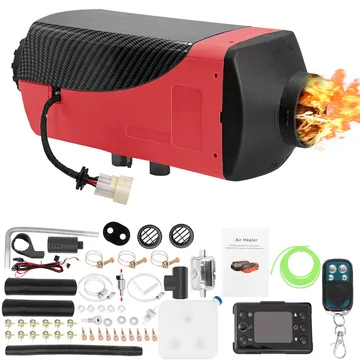
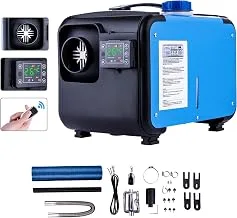
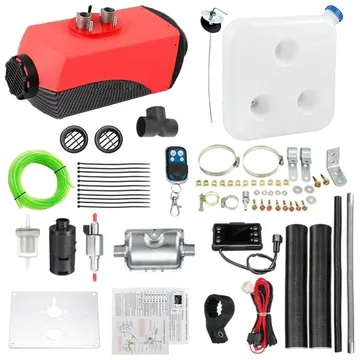
A typical Warm Air 9kW kit includes the heater unit, the exhaust pipe and clamps, the air supply and outlet ducting, the fuel line and fittings, an in-line fuel filter, a thermostat, and a wiring loom with the controller. What is usually not included is the fusing, a proper exhaust terminal/drip loop, and a CO detector — so budget a little extra for those. Confirm what is in the specific listing you buy, as the contents vary slightly between sellers.
Running Costs Over a UK Winter
Heating is the biggest running cost of a cold-climate van, so it is worth doing the maths. At full power the 9kW burns roughly 0.25–0.35 L/h, but it cycles, so a realistic figure is 0.5–0.7 L per night. At about £1.40/L that is roughly 70–100p a night. Over a two-month winter (60 nights) that is around £45–60 of diesel — a modest sum, but it climbs fast if your van is poorly insulated and the heater is running at full tilt all night. Good insulation and a thermostat are the cheapest way to cut the bill.
Noise, In Detail
The 9kW is not a "silent" unit. The blower fan and the small burner are audible if you are perfectly still at night, and the exhaust can crackle, especially with a long narrow run. In practice it is far less intrusive than a petrol generator and most people sleep through it, but if you are a light sleeper or you camp close to others, this is the main reason to consider a smaller premium unit or to insulate the exhaust run.
Common Failures and How to Avoid Them
Most problems with budget diesel heaters trace back to the install, not the unit:
- Fuel leaks — from a loose fitting or a kinked line. Use the in-line filter and a shutoff valve, and check every joint for leaks before the first winter trip.
- Waterlogged exhaust — from a missing or poorly formed drip loop, which lets condensation run back into the unit and rust it. Form a proper low point in the exhaust.
- Short-cycling / cold spots — from a 9kW that is too big for a small, well-insulated van. Size the heater to the volume.
- Corrosion — from an exposed or poorly vented install. Keep the unit in a ventilated, dry location away from the fuel line.
- CO risk — from a blocked or mis-routed exhaust. Never seal the exhaust, and fit a CO detector.
Is 9kW Right for Your Van?
A rough rule: a 2kW heater is comfortable for a small, well-insulated van (a T3 or similar); 5kW suits a mid-size Transit or Transporter; and 9kW is for a large Sprinter or a big, less insulated shell. If you are on the borderline, it is better to go smaller and add insulation than to fight a 9kW that short-cycles and feels "on-off." Match the heat to the volume and the unit becomes genuinely great value. When in doubt, start smaller and insulate — you can always add a second heater later, but you cannot easily live with an oversized one that short-cycles all winter.