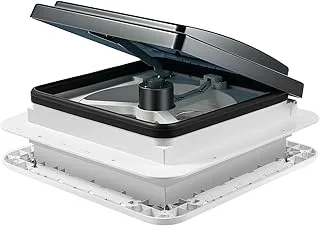

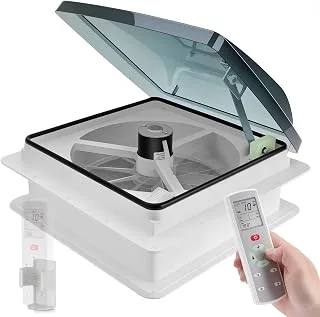
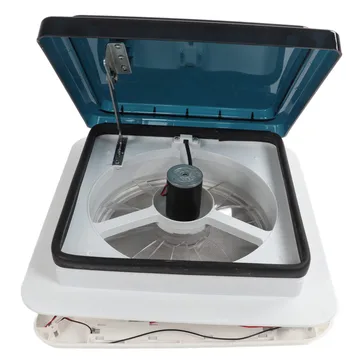
A portable fan and a powered roof vent solve different problems. The first mainly moves air around its surroundings; a roof extractor can move air through an outside opening when the installation provides an appropriate airflow path.
Choose the job before comparing maximum fan speeds. This guide is based on manufacturer information and planning considerations, not measured airflow or noise tests.
Compare the installation types
| Arrangement | Why consider it | Main constraint |
|---|---|---|
| Portable fan | Local airflow near a seating or sleeping position | It does not, by itself, provide a designed outside-air opening |
| Powered roof vent | Controlled extraction or circulation through a roof opening | Roof structure, weather sealing, wiring, clearances and installation work |
| Passive roof vent | Ventilation without a powered fan | Its operation and airflow differ from powered extraction |
A portable fan may be easy to move, but it should not be treated as equivalent to an installed ventilation system. Likewise, a powered vent does not remove the need to design the rest of the conversion appropriately.
A roof-fan example: Fiamma Turbo-Vent
The current Fiamma Turbo-Vent product page describes a ventilated rooflight with a nominal 40 × 40cm opening, cover choices and a mosquito net. Confirm the drawing and instructions for the exact unit before making a roof cut.
The Fiamma van catalogue, published for 2024, describes the Turbo-Vent and Premium powered versions alongside a passive Vent model. It identifies the powered versions as 12V equipment. Use that older catalogue as background; obtain the current model instructions for installation and electrical requirements.
These examples help distinguish the approaches. They are not evidence that one model is the best fit for every roof or that a particular opening can be cut safely in your vehicle.
Check the complete roof arrangement
Map roof ribs, existing equipment, solar panels and interior cabinetry. Include the space needed when the cover opens, and account for the finished roof thickness. Obtain advice from a competent installer where the structure or installation is uncertain.
Check seals, mounting components and the manufacturer's weather and travel instructions. Do not assume a separately advertised rain cover is compatible because its nominal size looks similar.
Compare comfort at the speed you will use
A maximum airflow number does not tell you how a fan will sound beside the bed at night. Look for speed control, usable controls from inside the van and access for cleaning. If you can inspect a working demonstration, judge the setting you would actually use.
Plan electrical demand using the chosen operating mode. A fan at one setting does not necessarily draw the same power as at another.
Before buying
Compare the total equipment and installation cost, the exact roof arrangement and whether the product's purpose matches your need. A ventilation fan is not refrigeration or air conditioning; for that separate question, read the campervan cooling guide.
Sources reviewed on 25 October 2026. No airflow, temperature or sound measurements were performed.